Windrose - Early Access
The pirate genre's renaissance has been a long time coming. With the excitement around Assassin's Creed Black Flag Resynced confirming what many already suspected, that there's real hunger for life on the high seas, the timing of Windrose couldn't feel more deliberate. It arrives not as a pretender to the throne, but as the first real gust of wind carrying this ship to a better shore.
Speaking of Assassin's Creed Black Flag, it is far from the only title the crew behind Windrose drew inspiration from. Valheim's building system, food mechanics and unhurried pacing; Black Flag's ship combat and feel; Sea of Thieves' sense of exploration, there's even a hint of "soulslike", with combat that demands patience, stamina management and well-timed parries. All of it is here, wearing its influences proudly on its sleeve. Windrose doesn't borrow carelessly, it curates, and the result is an experience that feels unmistakably, thrillingly like being a pirate.
(Image credit: Steam - Windrose)
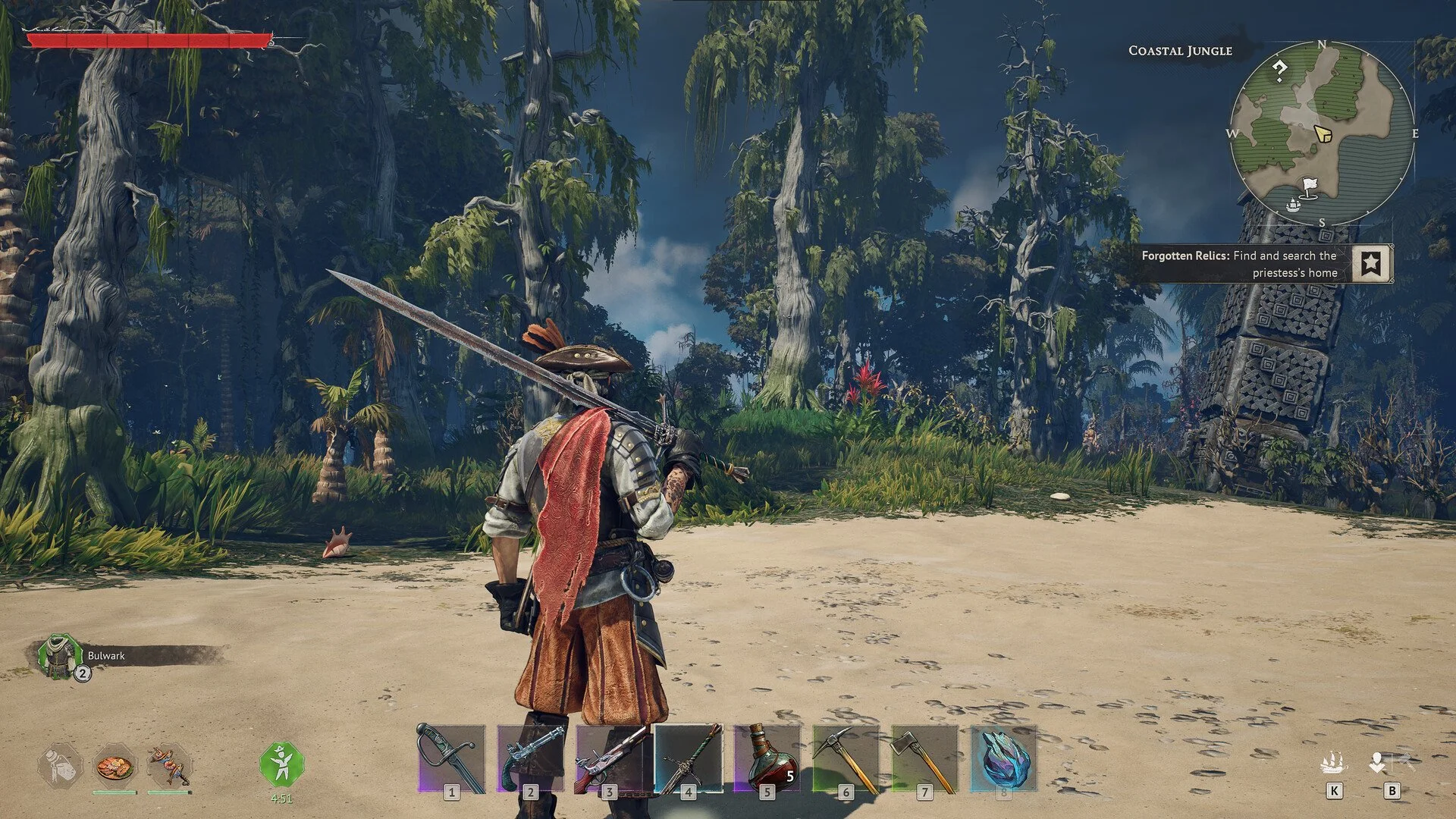
Windrose wastes no time throwing you into the deep end. The early game follows the familiar survival rhythm, gather wood, stone, plant fiber, build a campfire, follow the tutorial markers, but don't let the familiarity pull you into complacency. The boars will find you before you find them, and the combat, which we'll get to, demands more respect than you'd expect from what looks like a routine early encounter.
Progression, however, never feels far away. Within an hour you can see your camp taking shape, your tools improving, your character growing. There's a quiet satisfaction in that loop that Windrose understands well. By the time you've set up a few furnaces and smelters and you're watching copper ingots slowly pile up while you're out gathering food and resources, the game has already clicked into a rhythm. That moment, three furnaces running, pockets full, tools ready to upgrade... is when Windrose stops feeling like a survival game and starts feeling like a pirate one.
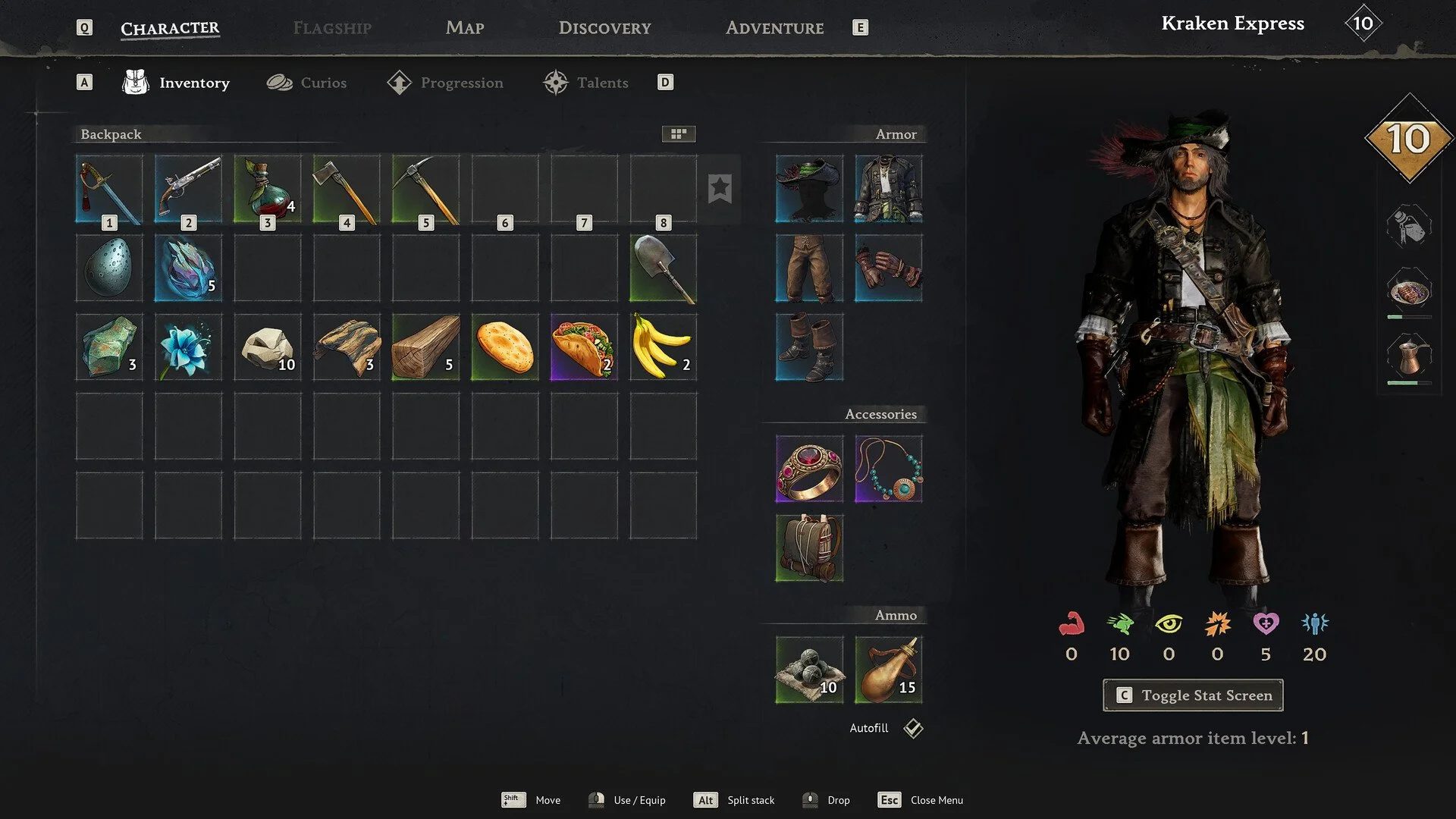
The food system, borrowed from Valheim's playbook, does more than just keep you alive. Different cooked meals contribute different stats, quietly shaping your build without ever feeling like homework.
The building system deserves its own moment. Walls, floors, ceilings, the basics are there, but Windrose refuses to lock you into a grid. Pieces don't snap to invisible constraints, which means if you want to build at an angle, or stack something improbably, or create something that shouldn't quite work structurally, the game lets you. It's a small freedom that goes a long way. The material cost never becomes obnoxious either, you're not grinding endlessly just to expand your camp. If you'd rather skip the creative process entirely, prefabs exist, grab one, plop it down, move on. There's also farming, which lets you grow your own food supply rather than constantly scavenging, turning your base into something genuinely self-sustaining. By the time you've got a farm running, furnaces smelting, and a structure that actually reflects your choices, your camp stops being a waypoint and becomes home.
Survival in Windrose is less a destination and more a launchpad. The further you progress, the more the island's resources deplete, and the sea starts calling. New islands mean new materials, new enemies, new possibilities. The survival loop never disappears, you'll always need food, minerals, wood… but it gradually shifts from the foreground to the backbone of everything you do.
(Image credit: Steam - Windrose)
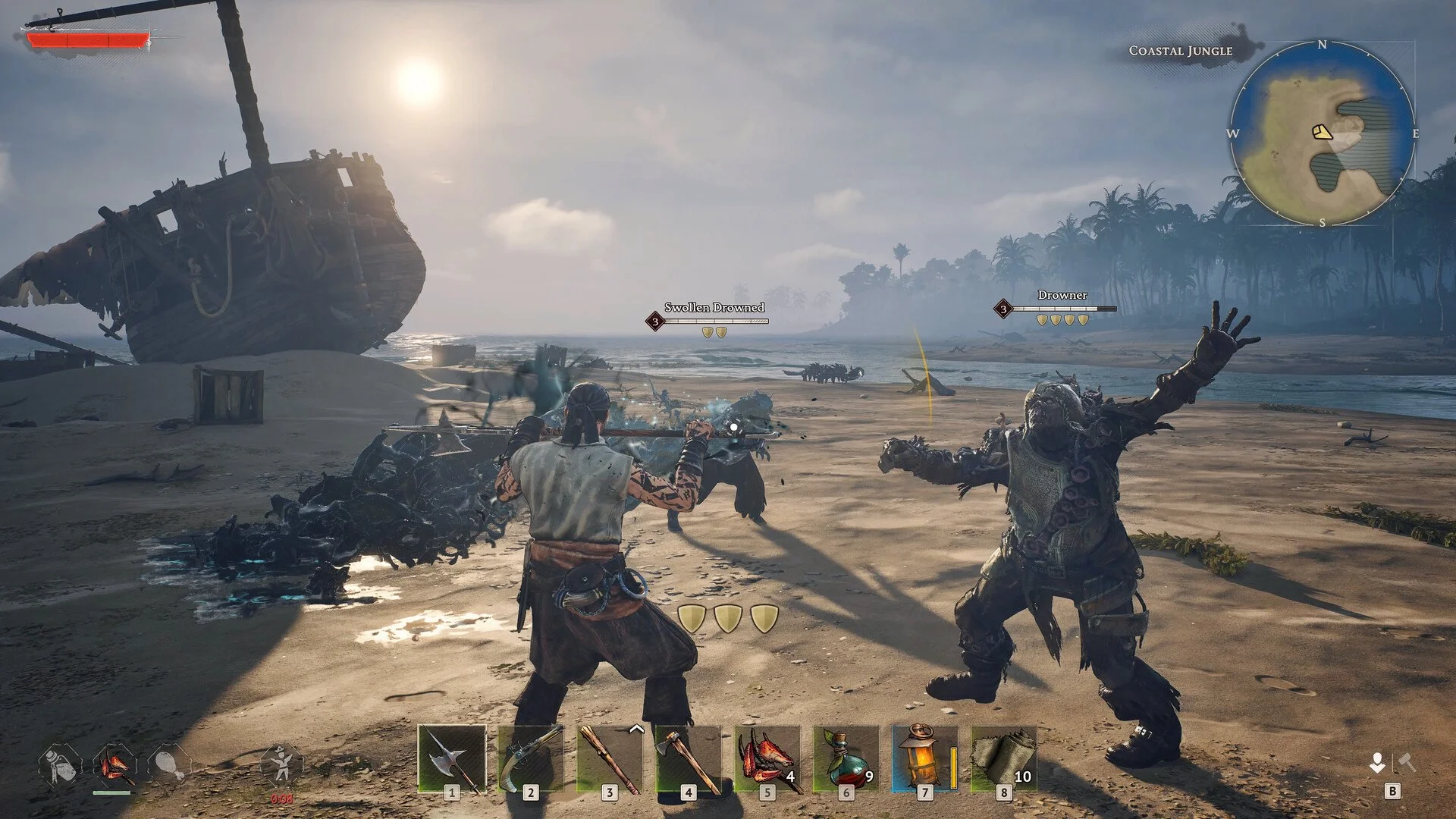
Combat in Windrose is slow, deliberate, and punishing in all the right ways. Your stamina depletes faster than you'd expect, and if you haven't eaten before a fight, your health bar will remind you of that oversight immediately and painfully. Windrose rarely gives you the courtesy of a fair fight either, 1v3 and 1v4 situations are common, some enemies mix their approaches freely, some closing in with heavy attacks while others keep their distance with muskets and pistols. Learning to split groups, find cover, and pick your moments isn't optional. It's survival.
There are three stat paths shaping your build: strength, precision and agility. All weapons scale accordingly. Early on I was running a strength weapon, doing okay, nothing remarkable. Then I found a precision rapier with bleed. The parrying window opened up, the rhythm clicked, and the game quietly became a different experience. That moment of finding a weapon that fits your instincts rather than forcing you to adapt to it is when Windrose's combat stops feeling like an obstacle and starts feeling natural.
Does it have rough edges? Early on, yes. Hits that don't register, attacks that connect when they shouldn't. Most of it smoothed out as I learned the system, and it's worth noting this is Early Access.
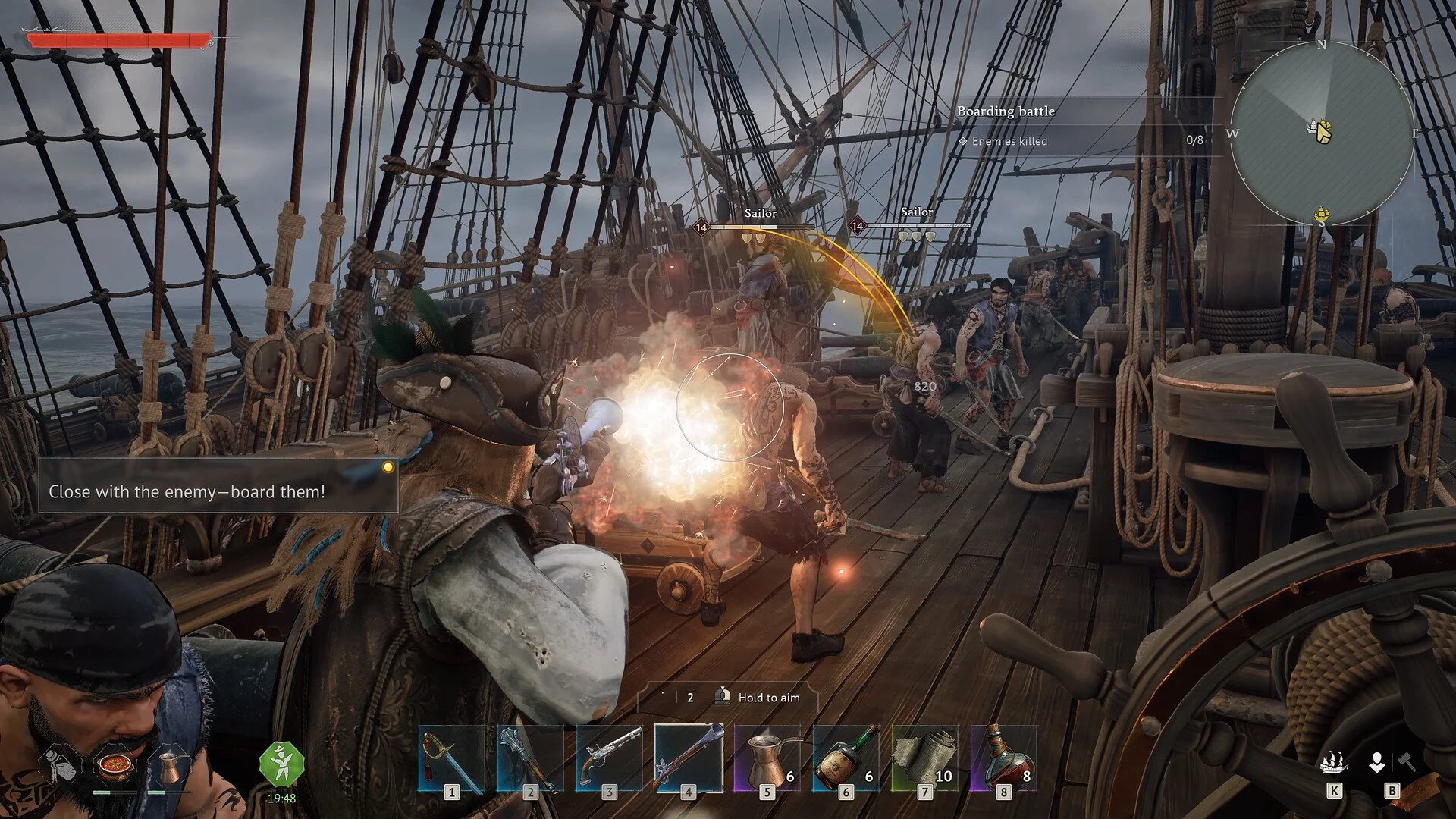
Step off the island and onto the water and Windrose shifts register entirely. Naval combat will feel immediately familiar to anyone who spent time with Black Flag, broadsides, cannon angles, positioning, everything's there. To board, you first need to fully deplete an enemy ship's health before closing in, and manoeuvring a ship that moves like, well, a ship, into the precise position needed can test your patience.
My only real frustration with the ship is how little you can do on it beyond sailing. You're largely locked to the helm, unable to climb the rigging, build, or watch the horizon from somewhere other than the navigation position. For a game this invested in the pirate fantasy, it's a gap that's hard to ignore, and one that feels like the most obvious thing a future update could fix.
(Image credit: Steam - Windrose)
Windrose's world is immediately striking. The art direction leans away from realism toward something more stylised, vivid, almost painterly, and it works beautifully. This is a world that knows exactly what it wants to look like, and UE5 with all It’s defects, delivers on that vision generously. Whether you're watching the weather shift over open water or approaching a new island through the fog, Windrose consistently looks like somewhere worth exploring.
The archipelago spans three distinct playable biomes, a fourth biome is planned for future updates. Each biome is locked behind its boss, which gives progression a satisfying sense of earned momentum, you don't stumble into harder territory, you fight your way there.
One of Windrose's quieter design triumphs is its discovery system. Crafting recipes remain hidden until you physically pick up a resource for the first time. It sounds simple, but it transforms exploration into something genuinely motivated. In co-op, dropping an item for a teammate passes that knowledge to them too, which is a small detail that speaks to how thoughtfully the system was considered.
The sea between islands can feel like simple travelling if you avoid conflict, and the shanties do a lot of work keeping that from feeling monotonous. I want to dedicate some real estate to the sea shanties. Some lifted straight from Black Flag, others new, all of them doing exactly what a good sea shanty should, making the open water feel alive. It's the detail that most surprised me, and the one I'd miss most if it were gone. But conflict finds you anyway, enemy ships patrol constantly, and treasure haulers make the fight worth considering.
Exploration in Windrose never feels like a chore. There's always another island, another question mark, another resource you haven't seen yet. The question of what's over the horizon is one the game consistently earns the right to ask.
(Image credit: Steam - Windrose)
Windrose supports up to 8 players in co-op, though the developers themselves recommend capping it at 4 for performance reasons. PvP is absent entirely, leaning firmly into the cooperative pirate fantasy.
Playing with a friend eases the early game considerably, the survival loop is less punishing, combat against overwhelming groups becomes manageable, and frankly, sailing is better with company. The game is designed to work solo and largely succeeds, but there's something fitting about facing the high seas with a crew, however small it may be.
Windrose launched into Early Access at €30, a fair price for what's here. The foundations are genuinely strong: three biomes, a full progression loop, naval combat, a functioning narrative. The roughest edge right now is optimisation, frame rates can dip, particularly around developed bases or when multiple players are on the server, but the developers have been fast to push updates and transparent about their roadmap.
For survival game veterans, Windrose is a familiar loop in an unfamiliar coat, and that familiarity is both its accessibility and its ceiling for some. But for anyone who has ever wanted a genuine pirate experience, one built on action, exploration, and the quiet romance of open water, Windrose is something rarer. It's not just another survival game with a pirate skin.
The ship is still being built. But for the first time in a long time, it's worth getting on board!
SCORE - 8.1/10
